Table of Content
Members of the police force say it's a combination of factors including the early release of prisoners, bail reforms, body cameras and other forms of public pressure on police officers. Some scholars believe the pandemic has worsened underlying social and economic instability in the city. After some arrests for violations of social distancing protocols turned violent, the city relaxed enforcement. Some non-compliant bars and restaurants, limited to take-out and delivery service during the pandemic, continued allowing customers to dine in or to gather outside bars with drinks.
On June 17, Cuomo announced that New York City is on track to enter Phase 2 of reopening on June 22. On May 26, the Hudson Valley region began Phase 1 of reopening, followed by Long Island on May 27. On May 4, Erie County Executive Mark Poloncarz said that unlike most other New York counties, Erie County was not ready to reopen on May 15 when Governor Cuomo's stay-at-home order is set to expire.
Nurse filmed his sexual assault of unconscious women at Colorado hospital, lawsuit alleges
Air travel and taxis are still permitted, as is ride-sharing on a personal basis, excluding group rides. In New York City, the mayor, Bill de Blasio, had pushed for a shelter-in-place order to limit even non-essential travel, such as by foot, bicycle or scooter. However, the state governor had repeatedly dismissed the idea, insisting New Yorkers would not be confined to their homes under a quarantine.
Additionally, starting in July, some of the open streets were made available for outdoor dining from Friday through Sunday. On April 27, 2020, de Blasio announced plans to convert 40 to 100 miles of streets to open streets. The affected streets would be closed to through traffic and blocked-off by temporary wooden or metal barricades with DOT signage. The purpose of the Open Streets is to provide "the space for essential workers to pursue safer commuting options, provide outdoor opportunities for vulnerable New Yorkers, and give families the chance to play beyond the four walls of their home".
Coronavirus In New York: Gov. Andrew Cuomo Extends Stay-At-Home Order Until June 13
The first phase of reopening began in June 2020 with reduced occupancy ceilings. The police department was ordered to enforce public health measures and conduct emergency inspections at private schools. Spikes in infection rates were observed in some neighborhoods, prompting tighter restrictions in ZIP codes that were identified as "cluster" areas.

All patrons must get tested and events must be approved by the health department. On September 26, the state recorded more than 1,000 daily COVID-19 cases, which marked the first time since June 5 that the state had seen a number that high. The increase was attributed to several neighborhoods in Brooklyn, in conjunction with the Rockland County communities of Spring Valley and Monsey along with Palm Tree in neighboring Orange County; all those areas have high Orthodox Jewish populations. Positive test rates for the virus in some of those locations were as high as 30 percent while rates statewide otherwise remained below 1 percent.
GOVERNOR
Beginning March 25, service on buses, subways, and commuter rail was reduced due to decreased ridership. Ridership had decreased by 92% on April 8, when 41 Metropolitan Transportation Authority workers had died. By April 22, 2020, COVID-19 had killed 83 agency employees; that number had increased to 131 by late August.
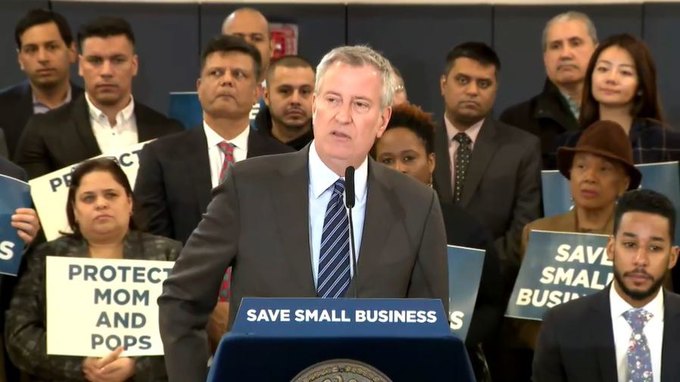
The order comes after California Gov. Gavin Newsom implemented a similar lockdown on the state’s 40 million residents on Wednesday to prevent the state’s medical system from being overwhelmed. While not enforced by police, the order instructs residents to stay home indefinitely and go outside only for essential jobs, errands, and exercise. This article was amended on 20 March 2020 to clarify that the figure of 90 days applied to the governor’s moratorium on evictions, not to the stay-at-home order. In New York “the violation of any provision of its order constitutes an imminent threat and creates an immediate menace to public health”, the mandate states.
All-cause deaths over time
The ongoing pandemic is one of the deadliest disasters by death toll in the history of New York City. As of June 17, 2022, the city's confirmed COVID-19 deaths exceeded 35,000 and probable deaths exceeded 5,500. The new cases confirmed over the past 24 hours bring Russia's total to 252,245, according to the country's coronavirus response headquarters. Abe credited the recent decline in the rate of new infections to the efforts of residents staying at home and practicing social distancing. However, he warned that the state of emergency may have to be reimposed if infections increase.

Two weeks after the restriction was lifted, The New York Times reported that tourism had begun to rise, though numbers were still far below 2019 figures. On April 6, 2020, The New York Times reported that the city's overall death rate had tripled and that morgues were overwhelmed. After councilman Mark D. Levine tweeted that temporary interment "likely will be done by using a NYC park for burials", NYC officials said they were not considering temporary burials in city parks. If there were one to two confirmed cases in the same class, the class would switch to full-time remote learning while the students and staff self-quarantined for two weeks. Social distancing has been recommended nationwide by the Centers for Disease Control and Prevention and World Health Organization since COVID-19 was first declared a national health emergency back in March 2020.
On January 13, 2021, 91 businesses successfully sued Governor Cuomo, the NYS Liquor Authority, and the Erie County Health Department to allow bars and restaurants that were closed in an orange zone to reopen operate under yellow zone regulations. This meant that businesses that fell under a current orange zone would no longer be forced to provide outdoor dining only , and would once again be allowed to serve alcohol indoors. On April 4, Cuomo likened the rapid spread of cases on Long Island to "a fire spreading", lowering the city's share of statewide cases from 75 percent to 65. Two days later, he extended the state's stay-at-home order and school closures to April 29. The state's death rate appeared to be leveling off, as well as new hospitalizations, and the rate of new cases was remaining steady, suggesting the state was reaching an apex, but he did not think it was safe yet to loosen restrictions. On March 20, de Blasio called for drastic measures to combat the coronavirus outbreak.

On March 17, as the number of confirmed cases rose to 814 citywide, de Blasio announced that the city was considering a similar shelter-in-place order within the next 48 hours. Across the boroughs of New York City, there were 277 confirmed cases in Manhattan, 248 in Queens, 157 in Brooklyn, 96 in the Bronx, and 36 in Staten Island. Cuomo said that the social distancing measures will be extended in coordination with other states, in which non-essential workers are being told to stay at home. The measures have meant the closure of businesses, schools, and other public venues, including movie and legitimate theaters.


No comments:
Post a Comment